I recently had the chance to attend LeSS in Action, and it turned out to be a great reminder of how small things — fast feedback, working environments, communication, and automation — really make or break how teams deliver software. Nothing I learned was revolutionary, but it simply reinforced the fundamentals.
Fast Feedback Loops With a Local Dev Environment
The biggest thing that stood out was how much faster everything moves when feedback loops are short. When you can test an assumption quickly, you stop guessing and start learning. It sounds obvious, but it’s amazing how many teams still operate on multi-day or even multi-week cycles before getting any validation on their work. At LeSS in Action, we worked in short, iterative bursts, and it completely changed how we made decisions. Instead of overthinking or trying to get things perfect upfront, we just tried ideas and adjusted based on what we saw. It wasn’t about working faster — it was about learning faster.
When the feedback loop is long, you start to fear your code. When you wait 10 minutes to an hour to see if a change worked, you start to fear breaking things. That fear prevents you from doing the work to produce quality software. The workshop drove home how important it is to design systems — both technical and process-wise — that give quick, clear feedback.
The next thing that was reinforced for me was how critical a working local environment is. When you can’t easily run or test your own code, development becomes a guessing game. Having been part of a process where local setups were so unreliable that people stopped trying to run the app altogether. They’d just push changes and hope CI caught something later. Over time, that creates a culture of fear — people avoid touching parts of the codebase they don’t fully trust.
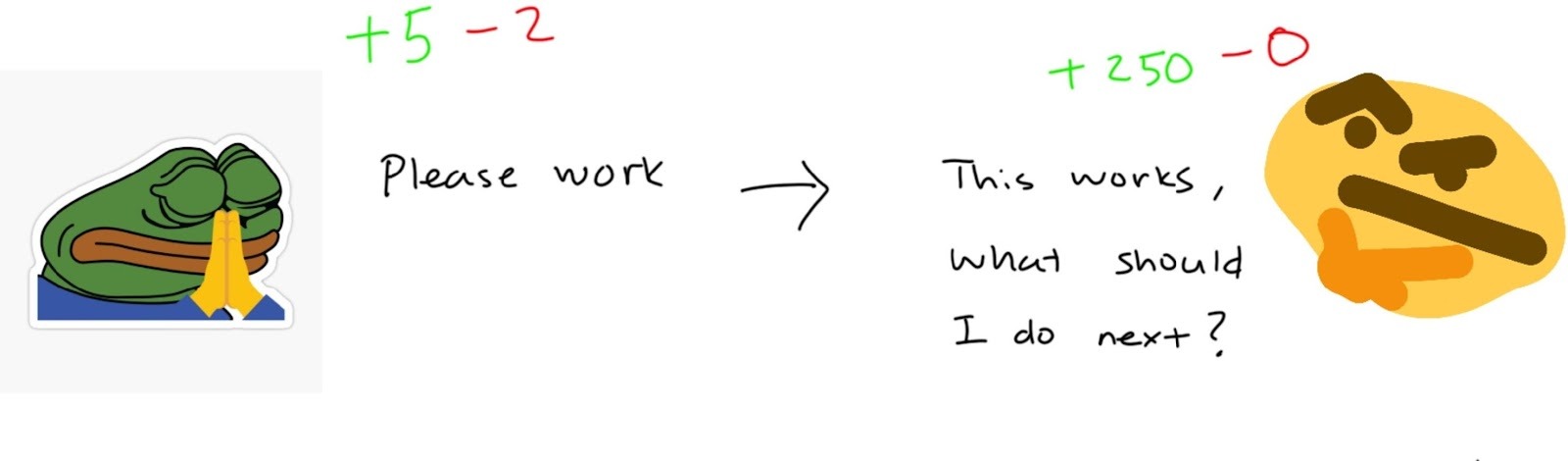
During the workshop, getting the environment working locally was the first major step. It wasn’t glamorous, but it made everything else possible. Once things were running smoothly, we could experiment freely and validate changes instantly. It reminded me that a working environment isn’t just a technical convenience — it’s a foundation for confidence. When it’s easy to see the impact of your work, you’re far more willing to make improvements.
Communication Keeps Everything Together
Working in a large group made me appreciate how quickly miscommunication can derail things. With several people contributing to connected parts of a system, it’s easy to drift apart if you’re not talking regularly. We had moments where two people thought they were aligned but ended up implementing slightly different interpretations of the same goal. The result was confusion and rework that could’ve been avoided with a few more check-ins.
It’s not about meetings or process — it’s about staying aligned on intent. Sharing what you’re doing, why you’re doing it, and what you’re unsure about helps others course-correct early. Once our group started communicating more openly — not just status updates, but reasoning and assumptions — everything became smoother. We didn’t have to “sync” as much because we were already aligned in how we thought about the work.
LeSS emphasizes coordination over control, and I could see why. Communication isn’t just about being polite or organized; it’s how you maintain shared understanding in a fast-moving system.
Automation Builds Confidence
The last major takeaway was the importance of automation — not just for speed, but for peace of mind. Automated tests and regression checks give you the confidence to make bigger, riskier changes. Without them, you hesitate to refactor or simplify things because it’s tedious to validate old behavior.
At LeSS in Action, having automated checks meant we could change things freely, knowing that automated regression tests would catch our mistakes. Instead of being cautious, you start being curious. You try new approaches, clean up messy code, and generally improve the system without worrying that you’ll accidentally destroy something. Automation also saves mental energy. You stop doing repetitive validation tasks manually, and that frees you up to focus on design and problem-solving. It’s one of those investments that pays off every single day. You might not notice the benefit in the moment, but you definitely feel the pain when it’s missing.
Wrapping Up
Looking back, my time at LeSS in Action reinforced a few simple but important truths. Quick feedback loops keep you learning and moving forward. A reliable local environment gives you confidence in your work. Clear communication prevents wasted effort. Automation turns fear into progress. None of these lessons were new, but seeing them play out together was eye-opening. When any one of them is missing, everything else slows down. When they all work together, development feels fluid — you spend less time fighting the system and more time improving it.
 T.8ytes by Titansoft