What happens when your entire team is made up of fresh graduates — eager, bright, but with no domain knowledge, no Scrum experience, and no seniors to lean on?
That was the question I faced as a ScrumMaster at Titansoft Singapore. A reorganisation had left the department fragile: previous seniors had burned out. They left, knowledge handovers were incomplete, and a senior had stepped in as the new manager with no prior experience. Into this environment stepped a group of newcomers — anxious, silent in meetings, and stressed by product support.
It felt like the start of Disney’s Hercules: all the strength and potential inside, but no clue how to use it.
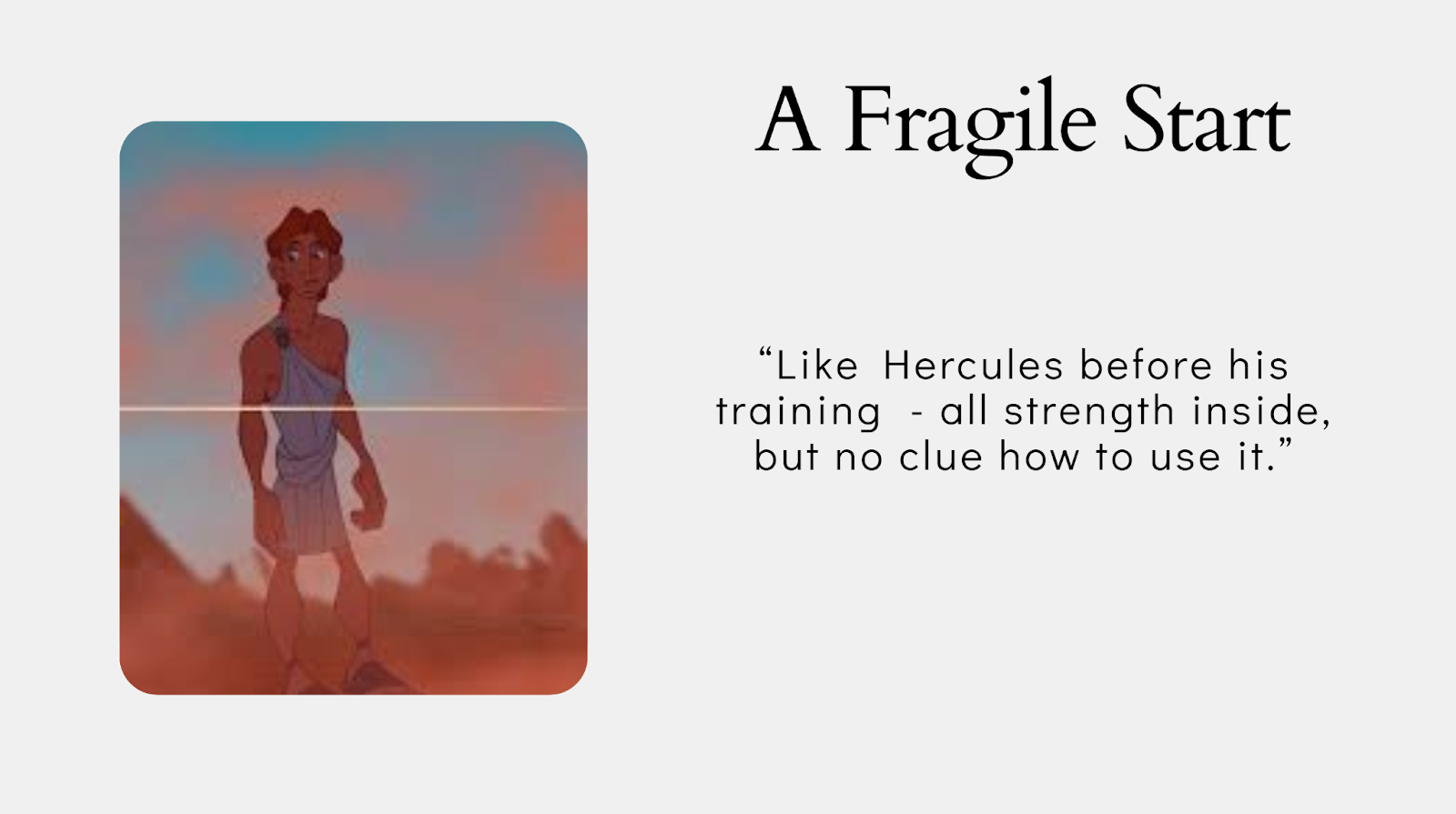
A Fragile Start
The team’s challenges were immediate and visible. They were overwhelmed by support duty, losing sleep before their shifts. They were hesitant to ask questions in meetings, afraid of saying the wrong thing. They had to learn the product domain and codebase on the go, without experienced mentors to guide them.
And yet, there were advantages too. This group of juniors carried no baggage from the past. They had high energy, fresh perspectives, and a hunger to learn. My role was to create an environment where those qualities could flourish, rather than being crushed by pressure.
Starting with the Basics
My priority wasn’t speed or delivery. It was to establish foundations:
- A Safe Environment To Voice Out: I built trust one conversation at a time through one-on-ones, monthly well-being surveys, and dialogue circles. I wanted the team to feel safe enough to share openly, even when they were struggling.
- Structure: Clear and consistent Scrum practices became anchors: sprint planning, retrospectives, reviews, and a well-defined Definition of Done. Even small things, like adjusting table layouts to encourage collaboration, helped reduce uncertainty.
- Trust & Learning: I encouraged small experiments, provided learning materials, and celebrated curiosity. Mistakes weren’t failures but opportunities. Leadership supported by sending in a senior from another department — not to solve everything, but to model learning and collaboration.
As I often remind myself, we don’t fix teams; we create the environment for them to grow.
The Hardest Moments
Even with these foundations, the early journey was tough.
- Slow Delivery: Without senior guidance, juniors spent much of their time just reading code and figuring things out. Sprint velocity remained low.
- High Stress: Support duty loomed over them like a storm. One teammate confessed she couldn’t sleep the night before her turn.
- Weak Communication: In meetings, they remained quiet, afraid to speak to the Product Owner or team members. “We thought we had to solve everything ourselves,” one member admitted.
It wasn’t just about learning software — it was about learning how to survive at work. These were the moments that tested my patience and resilience as much as theirs.
Signs of Change
Gradually, the effort began to show results.
- Sprint goals started being met more consistently.
- Team members began asking questions, offering feedback, and even smiling in retrospectives.
- Peer-to-peer learning became natural, with juniors helping each other troubleshoot.
- Emotional well-being improved — support duty was no longer a source of insomnia.
The real win wasn’t just delivery — it was seeing them open up. For the first time, they were shaping the process, not just enduring it.
A Team That Stands on Its Own
Over time, the team transformed from anxious juniors to confident contributors:
- They volunteered for new projects.
- The team itself ran retrospectives.
- They owned and committed to sprint goals.
- They communicated confidently with the Product Owner and customers.
- They proposed improvements and took action without waiting for permission.
- They collaborated across fluid teams, showing adaptability and initiative.
As one reflection put it: They no longer needed guidance in every ceremony — they were owning it.
What I Learned Along the Way
This journey wasn’t only about the team’s growth — it was about my own.
A Safe Environment To Voice Out
I learned that people don’t grow when they’re scared. They grow when they feel heard and supported. Listening deeply and holding space unlocked more confidence than pushing solutions ever could.
Structure
Structure provided stability in chaos. Simple, repeatable rituals like retros, surveys, and one-on-ones became the backbone that gave the team confidence to explore and learn.
Trust & Learning
I had to be patient, adapt to my role, and believe in their potential, even when the results were slow. As trust grew, so did courage — and that courage opened the door to experimentation and real change.
With the proper structure and safety, trust became a habit — and learning followed naturally.
Reflections
Looking back, the Hercules metaphor feels fitting. My team started like Hercules before training: insecure, inexperienced, but full of potential. Through patience, structure, and trust, they found their confidence — not overnight, but through many small steps that added up to transformation.
For me, the lesson is clear: with the right environment and mindset, anyone can grow. Teams don’t need fixing; they need the space to discover their own strength.
💡 Want to read more about how Titansoft transforms challenges into growth?
Dive into A Roaming Whale’s Tale: Titaner’s Quest to the Way of Agile, a story of Titansoft’s organizational transformation from 0 to 1.
Just like the juniors in this article grew through safety, structure, and trust, this book traces how the company itself evolved through five major transformation periods, from its early hero days to embracing Agile thinking in every detail.
 T.8ytes by Titansoft