As technology advances and society’s needs continue to evolve, sustainability in design has become essential. This article explores how design thinking provides a structured yet creative framework for crafting solutions that delight users and stand the test of time.
What is Design Thinking Sustainability?

Think of design thinking as the methodical yet creative process of cooking a great dish. It starts with understanding your diners’ needs (empathy), brainstorming meal ideas (ideation), defining the recipe to address key flavors and components (define), and perfecting the dish through adjustments and feedback (prototype and test). Now, imagine adding sustainability to this approach—choosing quality ingredients, minimising waste, and refining the flavors based on feedback to ensure every bite leaves a positive impression.
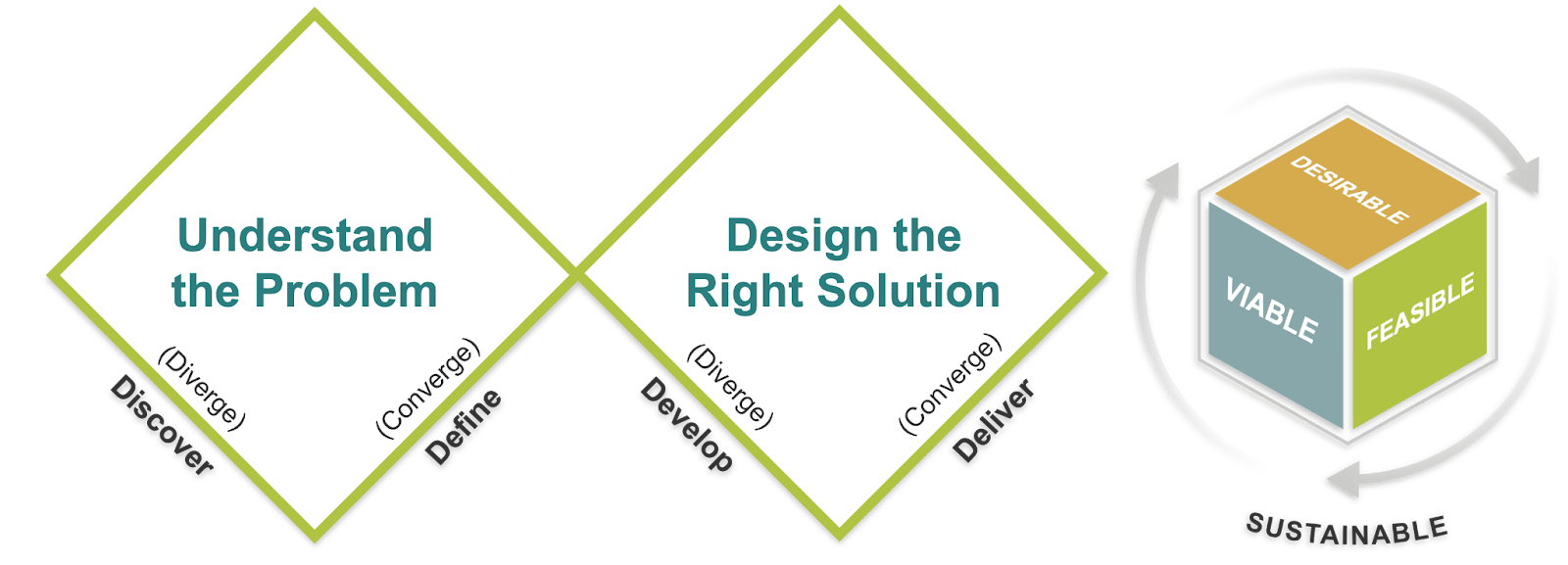
In design, this translates to minimising negative impacts while maximising positive outcomes, ensuring that solutions remain relevant and beneficial over time. A sustainable solution, much like a well-crafted dish, not only delights its audience but also fosters loyalty and drives growth. By focusing on these principles, we create experiences that bring customers back for more, ensuring long-term success and increasing value over time.
Stirring Up Success: Redesigning with Design Thinking and Sustainability
Every restaurant and chef’s goal is to deliver a meal that satisfies their diners (users) while keeping the preparation process efficient and sustainable. Imagine diners being asked to move between three different stations within the restaurant to complete their meal—one for the appetiser, another for the main course, and a third for dessert. Each station operates slightly differently, with different setups and instructions, forcing diners to spend unnecessary time navigating between stations and adjusting to inconsistent processes. This fragmented experience disrupts their enjoyment and leaves them dissatisfied.
This scenario mirrors the challenges faced on our site. One of our product’s desktop site had significant user experience (UX) issues that made completing tasks unnecessarily complex. Meanwhile, the mobile sites, while being less critical, added inconsistency and increased deployment and maintenance costs.
Our goal is to address the critical UX issues on the desktop site to improve user satisfaction, while unifying the three sites into a single, responsive site to decrease deployment and maintenance costs to ensure sustainability.
- Discover – Understanding diners’ frustrations
The first step to crafting a better dining experience was to understand what was currently causing frustration and inefficiencies for our diners (users):- Competitor Benchmarking: Studied how other restaurants (competitors) crafted intuitive and seamless dining experiences (UX).
- Quantitative Research: Analysed behavioral and business data to uncover inefficiencies:
- Diners spent extra time completing their meals (tasks) due to unclear workflows and redundant steps on our site.
- Qualitative Research: Observed diners and gathered insights indirectly through:
- Hotjar Recordings: These revealed points where diners hesitated or retraced their steps, suggesting unclear instructions or confusing flows.
- Customer Service Feedback: Repeated complaints from diners about their experience highlighted common frustrations and inefficiencies.
- CRM Logs: Showed incomplete meals (tasks) and bottlenecks, identifying areas needing improvement.
By gathering these insights, we ensured our approach was grounded in real data, focusing on addressing the most critical frustrations while preparing for a more sustainable and user-friendly redesign.
- Define – Identifying and prioritising issues
With a clear understanding of the diners’ pain points, we organised and prioritised the key issues to focus on the most impactful improvements:- Affinity mapping: Grouped feedback into themes such as unclear instructions, unnecessary steps, inconsistent experiences and others.
- Severity framework: While there were many improvements we wanted to implement, we needed to prioritise effectively within the resources available. Using this framework, we rated issues on a scale of 1 to 5 based on the following criteria:
- Task Criticality: How important is the meal (task) to the diner (user)?
- Impact: How much does it disrupt the diner’s experience?
- Frequency: How often do diners encounter this issue?
This prioritisation ensured that our resources were directed toward solving the most critical UX problems, creating a foundation for meaningful and sustainable improvements.
- Develop – Iterating and perfecting the experience
With our priorities clear, we moved into the development phase, focusing on refining the overall dining experience (UX) while creating a unified experience (responsive site):- User Flow: Redesigned the steps diners (users) take to complete their meal (tasks), simplifying workflows, clarifying instructions, and removing pain points that previously caused frustration on the site.
- Mockups: Created prototypes to visualise how the unified site would function, ensuring that the design resolved existing UX issues while maintaining a responsive and sustainable experience across devices.
- Iteration: Conducted repeated testing with diners to refine and enhance the design. Each iteration focused on creating smoother interactions, improving usability, and ensuring the solution was adaptable to future needs.
- Deliver – Launching
With refinements complete, we launched the responsive site to deliver a seamless and satisfying user experience:- User Acceptance Testing (UAT): Conducted final tests with diners to validate that the new design addressed their needs, resolved UX issues, and provided a cohesive experience.
- Post-UX Optimisation: Monitored feedback post-launch to identify opportunities for further improvement, ensuring the platform remained relevant and sustainable over time.
By continuously refining the solution, we ensured it not only solved immediate problems but also adapted to future user and business needs.
Measuring Sustainability
Sustainability in design extends far beyond environmental considerations—it is about creating solutions that are enduring, adaptable, and valuable to both users and the business. At the heart of sustainability lies continuous improvement and a commitment to ensuring every design decision aligns with our long-term goals:
- User Retention & Satisfaction (Desirability): We track engagement and satisfaction metrics to ensure that the redesigned project meets user needs effectively. By focusing on usability and delight, we build loyalty and trust with users.
- Adaptability and Scalability (Feasibility): Just as agile development emphasises iterative improvement, our solutions are designed to evolve with changing user needs and technological advancements. Scalability ensures that our product grows sustainably without requiring constant reinvention.
- Financial Viability (Business Sustainability): Sustainable design must align with business goals. Products that are financially viable contribute to long-term growth, avoiding the waste associated with launching and retiring unsuccessful solutions. Instead, we focus on creating robust projects that can endure and adapt.
- Post-Launch Optimisation (Continuous Improvement): Shipping a product is not the end—it’s just the beginning. Like a human who grows and learns every day, our platforms are designed to grow alongside users. We continuously monitor feedback and performance data to refine and improve the experience.
The lifecycle of sustainable design
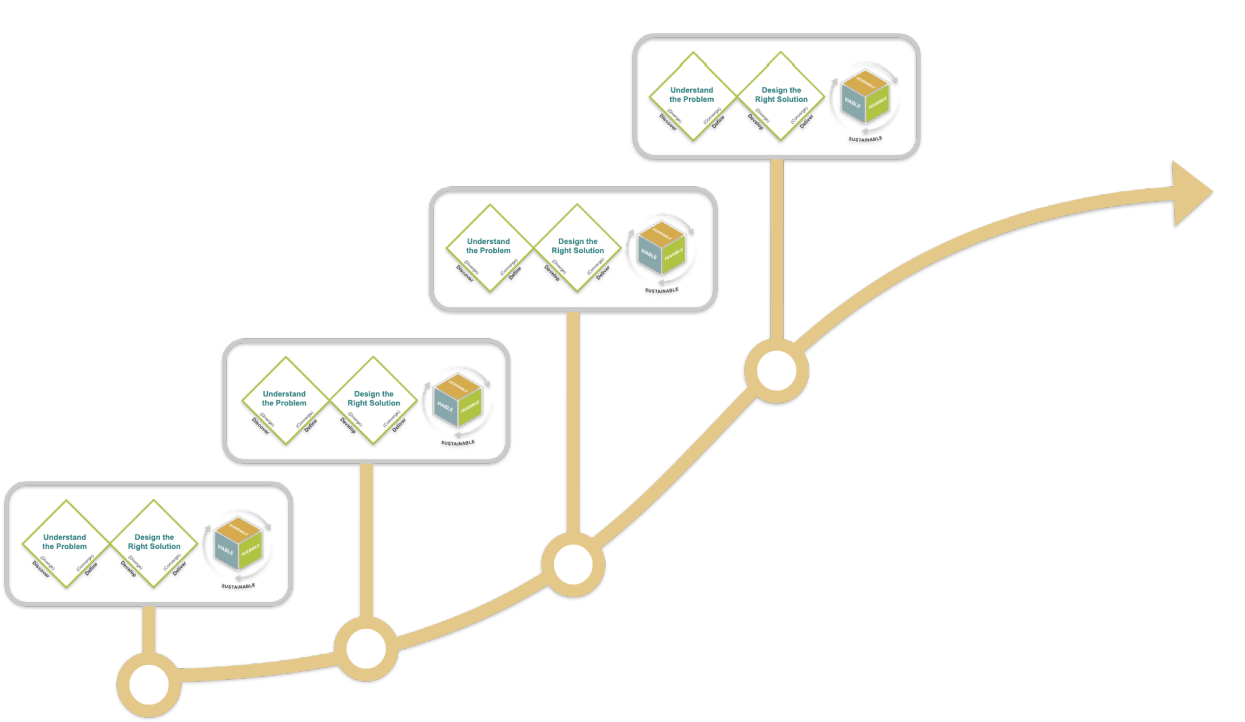
Sustainability is not a one-time achievement but an ongoing commitment. It’s about embedding principles of improvement, adaptability, and collaboration into every stage of the design lifecycle. The lifecycle of sustainable design integrates feedback loops, prioritisation, and cross-functional teamwork to ensure enduring value.

- Analysis: Begin with data-driven insights. Monitor user behavior, performance metrics, and feedback to identify friction points and opportunities for improvement. Our emphasis on value-focused design ensures that every enhancement is based on real user needs.
- Prioritisation: Resources are finite, making prioritisation essential. Guided by our severity framework, we identify the most impactful changes to address critical issues first, ensuring we deliver meaningful results with every iteration.
- Ideation & Proposal: Sustainability thrives on collaboration. We brainstorm creative solutions and propose enhancements that align with user needs, business goals, and long-term adaptability. This step emphasises being adaptive and transparent, core values that drive Titansoft’s culture.
- Implementation: Working closely with development teams, we transform proposals into tangible improvements. Following agile principles, we build iteratively, ensuring every update adds value without disrupting the broader system.
- Evaluation: After each release, we conduct thorough reviews to assess usability, effectiveness, and alignment with sustainability goals. Feedback from this stage feeds back into the analysis phase, creating a continuous loop of improvement.
Conclusion: Designing for a Sustainable Future
Sustainability in design is not a destination but a continuous journey. By embracing the agile development approach, we ensure that every solution is adaptable, iterative, and user-focused. Agile principles, such as flexibility, collaboration, and incremental improvement, enable us to refine our designs in response to real-world feedback and evolving needs.
Through this process, we can craft products that grow alongside users, adapt to technological advancements, and deliver consistent value over time. Agile development ensures that we don’t wait for the “perfect” solution—instead, we focus on making meaningful progress with every iteration, learning from each step to create a more sustainable and impactful experience.
As we integrate sustainability into our design thinking, we’re not just solving immediate problems—we’re building foundations for solutions that can thrive in the face of change.
 T.8ytes by Titansoft